Listening is a skill, not a talent — and it compounds. Each thing you learn to hear stays heard in every piece of music for the rest of your life. Here are five skills, in the order working musicians would teach them to you.
1. Find the bass and stay there
Play any song and attend only to the lowest voice. The bass is the harmony’s skeleton and the groove’s engine, and once you can hold onto it, music stops being a wall of sound and becomes architecture. This single skill upgrades more listening than any other.
2. Count the rooms
Songs are built from sections — verse, chorus, bridge; in jazz, the repeating form under the solos. Notice when the music changes rooms. Pop reveals its floor plan in one listen; a jazz tune reveals that everyone is soloing over the same repeating house, which is the secret that makes improvisation followable.
3. Follow one player through a jazz tune
Jazz overwhelms new listeners because everything moves at once. Pick the drummer — just the drummer — for an entire track. You’ll hear them commenting, goading, answering. Next listen, pick the piano. Jazz is a conversation, and you learn it the way you learn any conversation: one speaker at a time.
4. Hear classical music as argument
A symphony movement isn’t a mood — it’s a case being made. A theme is stated, taken apart, sent through hostile territory, and brought home changed. Ask “what’s happening to the melody I heard at the start?” and forty minutes of Beethoven becomes a plot.
5. Listen with someone who can point
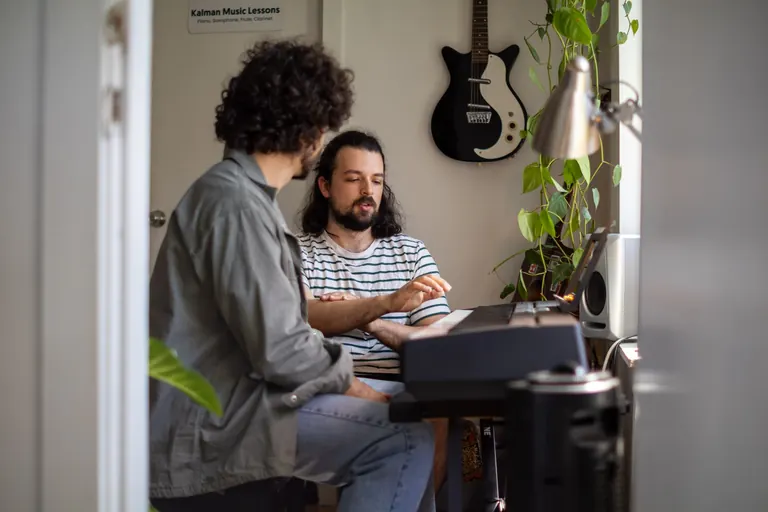
Every skill above goes ten times faster when someone stops the track and says there — that. That’s the entire format of a good appreciation class. Kalman Music Lessons runs a music appreciation class for adults in NYC starting fall 2026 — working musicians, live demonstrations, no theory and no experience required. Free on Pro/Elite memberships, $35 for everyone else.