It can be — the deciding factor is whether the music is the object of your attention or the background to something else. Music under a commute is wallpaper. The same piece, listened to as the entire activity, functions remarkably like meditation: a single object of attention, a wandering mind, and the repeated act of returning.
Why music is an easy door into mindfulness
Classic meditation asks you to attend to the breath, which is beige on purpose — and that’s why beginners bounce off it. Music solves the engagement problem: it’s structured, emotional and always moving, so attention has something to hold. You’re doing the same rep — notice the wander, come back — but the coming back is toward something beautiful.
A five-minute practice to try tonight
Pick one piece of music you love but haven’t truly heard in years. Sit, close your eyes, and follow one instrument through the whole track — just the bass, or just the left hand of the piano. When you notice you’ve drifted into thinking, return to your instrument. That’s the entire practice. Most people are startled by how much was always in there.
What deep listening is not
It is not music therapy — that’s a clinical discipline practiced by credentialed therapists, and an attention practice makes no clinical claims. What structured listening can offer is more modest: a quieter head, an hour without a screen, and a growing ability to be where you are.
Practicing with other people
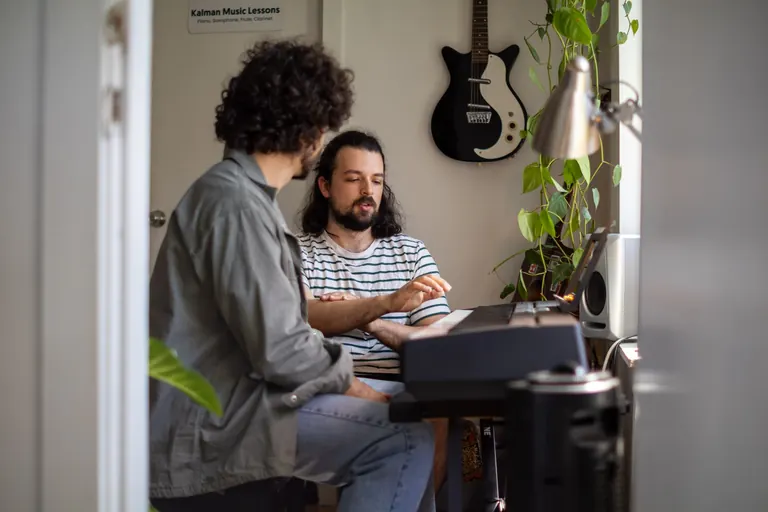
Solo listening is where most people’s practice quietly dies, the same way home meditation does. A weekly room fixes that. Kalman Music Lessons runs a mindfulness in music class in NYC starting fall 2026 — guided deep listening, sometimes with live musicians in the room, no playing and no experience required. Free on Pro/Elite memberships, $35 for everyone else.