A beginner singing warm-up takes five to ten minutes: reset your posture, breathe on a steady “sss,” then do lip trills, gentle humming, sirens up and down your range, five-note scales on vowels, quick tongue-twisters, and a one-minute cool-down. Keep everything easy and quiet — ease, not volume, is the goal.
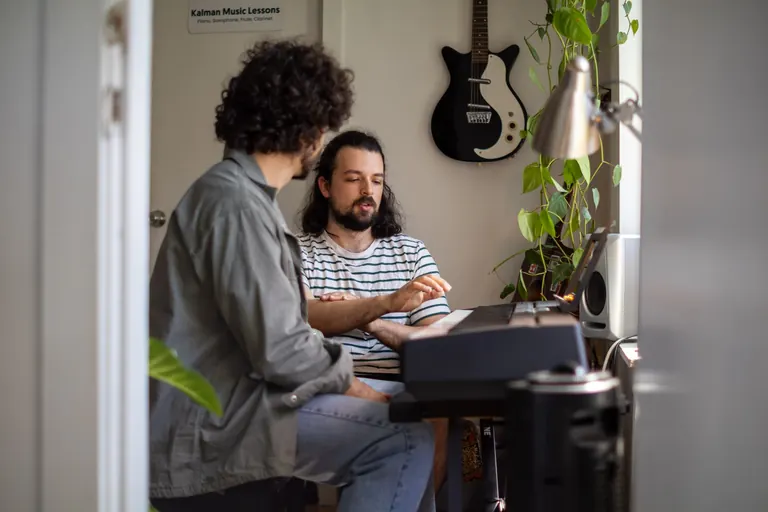
A voice teacher can hear straining habits you can’t — our voice teachers build singing warm-up routines around your voice in person across NYC & Westchester or online. Trial lessons are $15 in our studio, or $50 at your home.
Your voice is a muscle-driven instrument, and like any instrument it plays better warm than cold. A few minutes of gentle singing warm up exercises before you sing protects your vocal cords, expands your range, and makes every note come out cleaner. This guide walks you through a simple, repeatable daily routine — no special equipment, no music-theory background required.
Why Warm Up Before You Sing?
Singing cold is a little like sprinting without stretching. The vocal folds are two small bands of tissue in your larynx that vibrate hundreds of times per second when you sing. When they’re cold and tense, they don’t close smoothly, which is why an unwarmed voice often sounds breathy, cracks on higher notes, or tires quickly.
A good warm-up does four things:
- Increases blood flow to the muscles around the larynx, making them more flexible.
- Coordinates breath and tone so air pressure and vocal-fold closure work together instead of fighting each other.
- Gently extends your range by easing you into higher and lower notes rather than jumping straight to your limits.
- Reduces strain and injury risk, which matters most if you sing several times a week or perform.
You don’t need to warm up for an hour. Five to ten minutes is plenty for most beginners, and even three focused minutes beats none. The goal is preparation, not exhaustion — if your warm-up leaves your voice tired, it was too long or too hard.
The Daily Vocal Warm-Up Routine
Here’s a complete beginner routine you can do most days. Move through the steps in order: they progress from pure breath, to gentle buzzing sounds, to sung pitches. Keep everything at a comfortable, conversational volume. Loud is not the goal — easy is.
1. Posture and Body Reset (1 minute)
Before a single note, set up your body. Stand or sit tall with your shoulders relaxed and down, feet about hip-width apart, and your head balanced level — not tilted up to “reach” high notes. Roll your shoulders back a few times and let your jaw hang loose. Gently massage the muscles under your chin and along your jaw with your fingertips. Tension in the neck, tongue, and jaw is the number-one enemy of easy singing, so this reset matters more than beginners expect.
2. Breathing: Slow Diaphragmatic Breaths (2 minutes)
Good singing starts with good breathing. Place a hand on your belly. Inhale slowly through your nose and feel your belly expand outward — your chest and shoulders should stay quiet. Then exhale slowly on a steady “sss” sound, like a leaking tire, keeping the airflow even from start to finish. Aim for a smooth, controlled stream of air lasting 8 to 15 seconds.
Repeat four or five times. This trains breath support, the steady air pressure that lets you hold notes and sing phrases without running out or pushing. If you feel lightheaded, you’re breathing too hard or too fast — slow down.
3. Lip Trills (1–2 minutes)
Lip trills (also called lip bubbles or “motorboats”) are the single most useful warm-up for beginners. Relax your lips and blow air through them so they flutter, making a “brrrr” sound. Now add a pitch and glide gently up and down like a slow siren.
Lip trills are magic because they warm your voice while forcing you to use steady breath and without letting you push or strain — if you push too hard, the trill simply stops. They connect your low and high range smoothly. If you can’t get your lips to buzz, lightly rest two fingers on your cheeks near the corners of your mouth to support them.
4. Humming (1–2 minutes)
Hum a comfortable middle note on an “mmm,” keeping your lips gently together and your teeth slightly apart. You should feel a light buzzing or tickling sensation around your lips, nose, and the front of your face. That buzz is resonance, and chasing that forward, buzzy feeling helps you find a healthy, ringing tone.
Hum a few easy notes, then hum slowly up and down a short five-note pattern. Humming is low-effort and gentle on the cords, which makes it ideal early in a warm-up or on a day when your voice feels a little tired.
5. Sirens / Vocal Slides (1–2 minutes)
On an “ooo” or “eee” vowel, glide slowly from the lowest comfortable note in your range up to the highest and back down, like a fire-engine siren. Keep it smooth and connected — no gaps, no jumps. Sirens stretch your range and smooth out the transition between your lower “chest” voice and your lighter “head” voice, the spot where beginners often crack.
Go slowly and stay light, especially at the top. If a note feels like a strain, ease off before you get there and let your range open up gradually over days and weeks. Never force the top of a siren.
6. Five-Note Scales on Vowels (1–2 minutes)
Now add real pitches. Pick a comfortable starting note and sing up and down a simple five-note scale (do-re-mi-fa-sol-fa-mi-re-do) on an open vowel like “ah” or “ee.” Move the whole pattern up by a half step, sing it again, and keep climbing as long as it stays easy — then come back down. A piano or a free tuner/keyboard app helps you find starting pitches, but it isn’t essential.
Focus on even tone across every note and a relaxed jaw. This is where humming and lip trills pay off: aim to keep the same easy, buzzy feeling now that you’re singing on vowels.
7. Articulation Tongue-Twisters (1 minute)
Wake up your diction with a few spoken-then-sung tongue-twisters: “red leather, yellow leather,” “unique New York,” or the classic “mee-may-mah-moh-moo” on a single note. This limbers up your tongue and lips so words come out crisp when you sing an actual song. Keep the jaw loose and let the tongue do the work.
8. Cool-Down (1 minute)
After you sing — not just after warming up — spend a minute cooling down with gentle humming or soft lip trills in your easy middle range, descending slowly. A cool-down helps your voice settle back to speaking mode and reduces the tired, scratchy feeling that can follow a long practice or rehearsal.
Quick-Reference Warm-Up Table
Here’s the whole routine at a glance. Reps are approximate — listen to your voice over any counter.
| Exercise | What it does | Reps / duration |
|---|---|---|
| Posture & body reset | Releases neck, jaw, and tongue tension | 1 minute |
| Diaphragmatic breathing | Builds steady breath support | 4–5 slow breaths |
| Lip trills | Warms cords with zero strain; connects range | 5–8 slow glides |
| Humming | Finds forward resonance gently | 4–6 short patterns |
| Sirens / slides | Extends range; smooths register breaks | 4–6 full slides |
| Five-note scales on vowels | Applies warm-up to real sung pitches | 5–8 keys up & down |
| Articulation twisters | Sharpens diction and consonants | 3–4 phrases |
| Cool-down | Settles the voice after singing | 1 minute |
Protecting Your Vocal Health
Warm-ups are only useful if they keep your voice healthy, so keep these principles front and center as a beginner:
- Never sing through pain. A little effort on a new high note is normal; sharp pain, a raw feeling, or a scratchy throat is a stop sign. Rest instead.
- Stay hydrated. Vocal folds work best when your whole body is well-watered. Sip room-temperature water throughout the day, not just right before you sing.
- Stay in your comfortable range. Range grows gradually. Chasing notes that aren’t there yet is the fastest way to strain.
- Keep the volume moderate. Warm-ups should be easy, not belted. Save power for songs, once you’re warm.
- Rest when you’re sick or hoarse. Singing on an inflamed or laryngitis-affected voice can cause real damage. Take the day off.
- Warm up before, cool down after. Bracketing your singing this way protects you over the long run.
If you ever notice persistent hoarseness lasting more than two weeks, or your voice regularly gives out, check in with a doctor or a voice teacher. The right technique should feel easier over time, not harder. A trained ear can spot straining habits you can’t hear yourself, which is one of the biggest advantages of working with a teacher through structured voice lessons rather than guessing on your own.
Common Beginner Mistakes to Avoid
Even a good routine gets undermined by a few predictable habits:
- Skipping the breath work. Breathing feels boring, so beginners rush past it — but every other exercise depends on steady air. Don’t skip step two.
- Lifting the chin for high notes. Reaching your head upward tightens the throat and does the opposite of what you want. Keep your head level.
- Warming up too loud. Volume isn’t the point; ease and coordination are. Loud warm-ups tire the voice before you’ve sung a note of music.
- Going too high, too fast. Let range open gradually across the routine and across weeks. Forcing the top is how strain and cracking start.
- Forgetting to cool down. The minute of gentle descending hums after you sing is the step people drop first and miss most.
Just like a guitarist runs through finger exercises or a pianist plays scales before tackling a piece, singers warm the instrument first. If you also play a keyboard, a few minutes at the piano is a great way to find your starting pitches for scales and check that you’re singing in tune.
Building the Habit
The best warm-up is the one you actually do. Attach it to something you already do daily — right after your morning coffee, or before you put on music in the shower. Consistency beats intensity: three minutes every day builds a healthier, more flexible voice faster than a rare thirty-minute session. Track how your voice feels over a few weeks, and you’ll notice notes that used to crack starting to come out clean.
Frequently Asked Questions
How long should a beginner warm up before singing?
Five to ten minutes is ideal for most beginners, and even three focused minutes is far better than none. The point is to prepare your voice, not tire it out. If your warm-up leaves your voice feeling fatigued before you’ve started singing songs, it was too long or too intense — shorten it and keep everything gentle and easy.
Can I warm up my voice without a piano or any equipment?
Yes. Breathing exercises, lip trills, humming, and sirens require no equipment at all and make up the core of a good warm-up. A piano or a free tuner or keyboard app is helpful for finding starting pitches when you sing scales, but it’s optional — you can slide and siren through your range entirely by feel and by ear.
How do I know if I’m straining my voice?
Healthy warm-ups feel easy and buzzy, with a light ringing sensation around your face. Warning signs of strain include a scratchy or raw throat, sharp pain, a tight or squeezed feeling in the neck, and cracking that gets worse rather than better as you go. If you notice these, stop, rest, sip water, and sing more quietly and in a smaller range next time.
Should I warm up every day, even on days I don’t perform?
Gentle daily warm-ups keep your voice flexible and build good technique through repetition, so a short routine most days is beneficial. On days you don’t sing at all, you can skip it. Just be sure to warm up any day you plan to sing seriously, and always give your voice full rest days when it feels tired or you’re sick.
Are these warm-ups suitable for kids and teens?
Yes — breathing, lip trills, humming, and gentle sirens are safe and effective for younger singers, and the “easy, never strain” principle matters even more for developing voices. Younger singers should keep sessions short and stay well within a comfortable range. A voice teacher can tailor a routine to a growing voice and make sure habits stay healthy from the start.
Ready to Sing With Confidence?
A warm-up routine is the foundation, but the fastest way to improve is honest feedback from someone who can hear what you can’t. Our voice teachers help beginners build healthy technique, expand range safely, and actually enjoy singing. Book a $15 trial lesson and let us match you with a voice teacher who’ll set you up with a warm-up routine built for your voice.