Most adults play their first simple songs within 2-3 months and reach a comfortable, confident level in 1-2 years with 20-30 minutes of practice most days. Faster instruments like ukulele and guitar sound good in 3-12 months; piano, voice, and violin take 1-3 years. Consistency matters far more than age or talent.
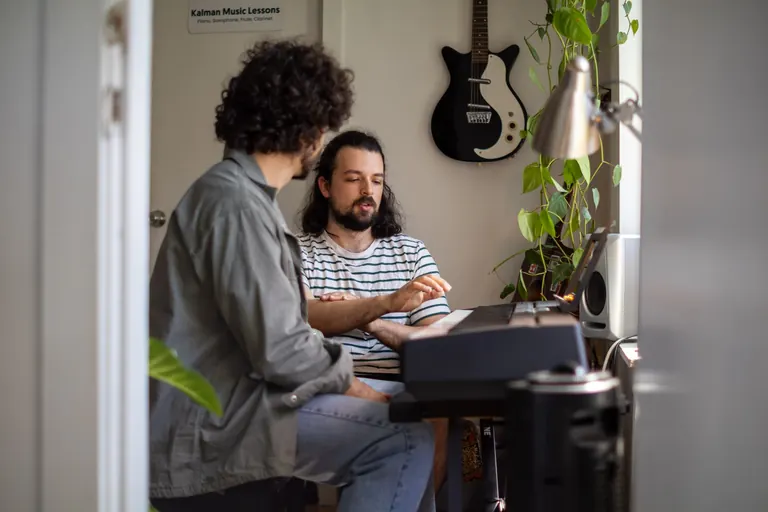
The single biggest lever on that timeline is a teacher: most of the months adults lose go to habits nobody corrected and practice aimed at the wrong thing. Our teachers work with adult beginners in your home, at our Manhattan and Brooklyn studios, or online — tell us your goals and plan a first lesson.
For many adults, the decision to start music lessons marks a deeply personal milestone. Whether it’s the dream of playing piano pieces that once inspired them or the desire to jam effortlessly on guitar, the question always lingers - how long does it really take to learn an instrument? When taking Adult Music Lessons in New York, the answer often depends on multiple factors such as the learner’s goals, practice habits, and consistency.
Learning music as an adult is less about speed and more about steady progress. While some may reach basic fluency in six months, others might need several years to achieve the same comfort. What truly matters is the journey - not the race.
Is it ever too late to learn an instrument?
No — adults learn instruments successfully at any age. A common misconception is that music mastery is reserved for those who start young. This belief has discouraged countless adults from ever starting. However, research and real-life success stories prove otherwise. Adults bring distinct advantages to the learning process: stronger focus, emotional depth, and the ability to self-direct.
Adults often excel because they:
- Have a clear motivation for learning.
- Can relate music to life experiences and emotions.
- Manage structured practice more efficiently.
Age is not a barrier; it’s simply another factor in the timeline. What’s needed most is persistence and a willingness to engage with music every day.
What are the stages of learning an instrument as an adult?
Expect basic familiarity in 3-6 months, comfortable playing in 6-12 months, stylistic expression in 1-3 years, and real fluency in 3-5 years. Learning an instrument doesn’t happen overnight, but these patterns can help set realistic expectations.
- First 3-6 Months: Basic familiarity with the instrument - posture, finger placement, simple scales, and short tunes.
- 6-12 Months: Comfort with reading notation, improved rhythm, and playing along with backing tracks.
- 1-3 Years: Developing stylistic expression, intermediate technique, and playing with others.
- 3-5 Years: Achieving fluidity and personal style, performing confidently, and expanding repertoire.
These timeframes vary by instrument, genre, and personal dedication, but they highlight one truth - consistency trumps intensity.
How Long Until You See Progress in Music Lessons?
Most adults want to know one thing before they start: when will I actually notice I’m getting better? The encouraging news is that early progress in music lessons comes faster than most people expect.
- After 2-4 weeks: With 15-30 minutes of practice most days, you’ll play your first recognizable riff, chord, or short melody. This is the moment music stops feeling foreign.
- After 4-8 weeks: You’ll play a full simple song from start to finish and begin switching between notes or chords without stopping to think.
- After 3-6 months: Progress becomes obvious to the people around you. Timing tightens, tone improves, and playing starts to feel relaxed rather than effortful.
- After 6-12 months: You’ll comfortably learn new songs on your own and start developing a recognizable personal sound.
If you’re not seeing progress at all after a month or two, it’s almost always a practice-consistency or teaching-fit issue rather than a talent ceiling - something a good teacher can diagnose quickly. You can tell us your goals and plan a first lesson to find the right fit.
Here is what each stage sounds like from the outside, and what is really happening underneath:
| Timeframe | What it sounds like | What is really happening |
|---|---|---|
| Weeks 1–4 | Single notes, exercises, fragments | Posture, first sounds, practice habit forming |
| Months 2–3 | First simple songs, slow and careful | Notes connecting into phrases; reading begins |
| Month 6 | 3–6 recognizable pieces | Skills compounding; new songs come faster |
| Year 1 | Simple music played confidently | Independence; technique becoming automatic |
| Year 2+ | Intermediate repertoire, personal style | Music becomes self-sustaining |
The first month is the one people misjudge. It sounds like nothing — fragments and exercises — while the two things that decide everything afterwards, a working practice habit and a relaxed physical setup, are being built. Students who quit usually quit here, a few weeks before the first real song.
How long does it take to learn each instrument?
Anywhere from about 3 months (ukulele) to 2-3 years (violin) to feel confident, with a first playable song coming within 1-8 weeks on most instruments. Every instrument has its own learning curve. Some reward you with a playable song in the first week, while others take longer to sound good but pay off with deep expressiveness. The table below shows realistic timelines for an adult beginner practicing 20-30 minutes most days.
| Instrument | First song | Comfortable / confident |
|---|---|---|
| Piano | 2-4 weeks | 1-2 years |
| Guitar | 3-6 weeks | 6-12 months |
| Ukulele | 1-2 weeks | 3-6 months |
| Voice | 2-4 weeks | 1-2 years |
| Drums | 2-4 weeks | 6-18 months |
| Violin | 2-4 months | 2-3 years |
| Saxophone | 4-8 weeks | 1-2 years |
“First song” means playing a simple, recognizable tune from beginning to end. “Comfortable / confident” means playing relaxed, in time, and able to learn new material largely on your own. Faster instruments like ukulele and guitar are popular first choices, while piano and voice build a foundation that transfers to almost everything else. If you’re weighing options, our instrument overview and pricing can help you decide, and affordable rentals let you start without buying gear first.
What affects how fast adults learn an instrument?
Practice frequency, quality of instruction, mindset, physical comfort, and your musical environment shape progress more than raw hours. Progress isn’t solely determined by time spent practicing. It’s shaped by a combination of mental, physical, and environmental elements.
Key influences include:
- Practice frequency: Regular short sessions outperform infrequent long ones.
- Quality of instruction: A skilled teacher adapts techniques to adult learning styles.
- Mindset: Viewing challenges as opportunities accelerates growth.
- Physical comfort: Proper posture and relaxation prevent strain and frustration.
- Musical environment: Surrounding yourself with music daily nurtures intuition.
When these elements align, even a beginner can make remarkable strides within a year.
The Importance of Goal Setting
Learning music without clear goals often leads to stagnation. Adults thrive when they know why they’re learning.
Common adult music goals include:
- Playing for personal relaxation.
- Joining a local ensemble or band.
- Performing at family events.
- Composing or recording original songs.
By defining these objectives early, practice sessions become purposeful, and progress feels measurable. A sense of direction transforms learning from a hobby into a lifelong passion.
How much practice do adults need to make progress?
About 20-30 minutes of focused playing most days is enough for steady, visible progress — there’s no substitute for consistent, mindful practice. Adults balancing busy schedules may not have hours each day, but even 20-30 minutes of focused playing can yield immense growth.
A productive practice routine often includes:
- Warm-up exercises to loosen fingers and relax the body.
- Skill drills focusing on scales, chords, or tone production.
- Song practice to apply technical skills musically.
- Reflection time to identify areas of improvement.
Rather than fixating on total hours, measure progress by fluency and enjoyment. Music grows best when it’s nurtured regularly, not rushed.
Balancing Patience and Progress
One of the greatest challenges adults face is managing expectations. Many assume visible improvement should come quickly. However, true musicianship unfolds gradually.
To stay motivated, remember:
- Each practice session contributes to long-term mastery.
- Mistakes are markers of growth, not failure.
- The learning curve flattens with persistence and mindful repetition.
Every adult learner who stays consistent eventually experiences a moment when the instrument “clicks” - and music begins to flow naturally.
The Role of Professional Instruction
While self-teaching resources are widely available, structured lessons often accelerate results. Trained instructors help adults navigate challenges like tension, reading notation, or rhythmic timing.
Benefits of professional lessons:
- Immediate feedback on technique and sound.
- Personalized learning plans tailored to goals.
- Exposure to diverse genres and playing methods.
- Accountability that keeps progress on track.
A teacher can help you choose a manageable practice task and notice habits that are holding you back. Compare lesson lengths and prepaid packages, Westchester home-lesson rates and NYC studio memberships against the time you can attend. Our complete guide for adult learners explains how to choose a format.
Which instrument should an adult beginner choose?
Choose the instrument you’re most excited to practice daily — but know that the timeline to proficiency varies widely depending on the instrument. Some instruments allow quicker initial progress, while others require extended technical refinement.
For instance:
- Guitar or ukulele: 6-12 months for comfortable chord changes.
- Piano: 1-2 years for reading notation and hand coordination.
- Violin: 2-3 years for tone control and bowing accuracy.
- Drums: 6-18 months for rhythm precision and groove stability.
Choosing an instrument aligned with your personality, patience, and physical ability can make the process far more rewarding.
Overcoming Adult Learning Challenges
Adults face distinct hurdles when starting music. Limited free time, fear of failure, or physical stiffness can slow progress - but these challenges are not insurmountable.
Ways to overcome them:
- Schedule short, daily sessions instead of sporadic marathons.
- Record your playing to track gradual improvement.
- Stretch and warm up to maintain flexibility.
- Replace self-criticism with curiosity and patience.
Progress thrives when you shift focus from perfection to persistence.
The Psychology of Music Learning
Learning an instrument engages memory, coordination, and emotion - all crucial cognitive skills that benefit adults in many areas of life.
Mental benefits include:
- Enhanced concentration and focus.
- Improved emotional regulation and stress relief.
- Strengthened problem-solving and creativity.
These cognitive advantages often make adult learners more resilient and intentional compared to children, balancing technique with emotional intelligence.
Measuring Progress Effectively
Progress isn’t just about how many songs you can play. It’s about musical understanding, expression, and consistency.
Good indicators of progress include:
- Improved timing and smoother transitions.
- Ability to play from memory or improvise.
- Comfort performing for small audiences.
- Clearer tone and dynamic control.
Recording performances monthly can highlight subtle improvements and maintain motivation when results feel slow.
Staying Consistent Amid Busy Schedules
For adults balancing careers and families, maintaining practice momentum is often the biggest hurdle. Time scarcity can erode motivation, but it can be managed strategically.
Time management strategies:
- Set fixed practice windows in your calendar.
- Keep your instrument accessible and ready to play.
- Practice during low-energy hours to unwind, not rush.
- Combine practice with relaxation - music should recharge you.
A predictable, flexible schedule keeps enthusiasm alive even on hectic days.
The Joy of Lifelong Learning
The beauty of music lies in its endless growth potential. No one truly “finishes” learning an instrument. Even professionals continue refining their technique, exploring new genres, and experimenting with tone.
For adult learners, this ongoing process is liberating. Each milestone achieved, no matter how small, opens new creative doors. The journey fosters patience, mindfulness, and self-expression - qualities that extend far beyond music.
Realistic Expectations: What “Learning” Really Means
Learning an instrument isn’t about reaching a single endpoint. It’s about reaching levels of comfort and fluency that match your personal goals.
You might aim to:
- Play favorite songs effortlessly.
- Compose simple melodies.
- Join a community music group.
- Perform confidently at open mics.
Mastery takes years, but enjoyment can begin almost immediately. The sooner you start, the sooner the rewards unfold.
Tips to Accelerate Progress
While there’s no shortcut to mastery, certain habits make learning more effective and enjoyable.
Practical ways to progress faster:
- Practice slowly before increasing speed.
- Focus on tone and rhythm accuracy over volume.
- Learn music theory basics to understand structure.
- Surround yourself with musicians for inspiration.
- Rest your hands and mind to prevent burnout.
Incremental improvement compounds quickly when paired with mindful effort.
When Music Becomes a Lifestyle
At some point, the instrument stops feeling like an external tool and becomes an extension of the self. This transformation happens naturally through regular practice and emotional connection.
You begin to:
- Hear melodies differently in everyday life.
- Express emotions through improvisation.
- Use playing as a form of reflection or stress release.
When music integrates into daily living, learning becomes effortless and deeply fulfilling.
Frequently Asked Questions
How long does it take to learn an instrument?
Most adults reach a comfortable, confident level in one to three years of consistent practice, but you’ll play your first simple song within a few weeks. Easier instruments like ukulele and guitar sound good faster, while piano, voice, and violin take longer to feel fluent. The exact timeline depends far more on regular practice than on age or natural talent.
How long does it take to see progress in music lessons?
Most adult beginners notice real progress within two to four weeks - your first recognizable riff or melody - and clear, obvious improvement by three to six months. If you practice 15-30 minutes most days, early wins come quickly. A lack of progress after a month usually points to inconsistent practice or a poor teaching fit rather than a talent limit.
What instrument is easiest to learn as an adult?
Ukulele is often the fastest, with a playable song possible in the first week or two, followed by guitar and piano. Piano is especially beginner-friendly because notes are laid out clearly and you can make music with one hand right away. The “easiest” instrument is ultimately the one you’re most excited to practice every day.
Is it too late to learn an instrument as an adult?
No - it is not too late. Adults actually bring advantages children lack: clearer motivation, better focus, and the discipline to practice deliberately. While young learners may pick up some habits faster, adults often progress more efficiently because they understand what they want and why. Plenty of people start in their 40s, 60s, and beyond and play beautifully.
How much should I practice to learn an instrument faster?
Aim for 20-30 minutes of focused practice most days rather than one long weekly session. Short, frequent practice builds muscle memory far more effectively than occasional marathons. Consistency and quality of attention matter more than total hours, so daily short sessions beat sporadic long ones every time.
Conclusion
So, how long does it take adults to learn an instrument? The honest answer - as long as it takes to fall in love with the process. Some reach comfortable proficiency in a year; others may take longer. The pace is secondary to the joy of progress.
What defines success isn’t how fast you play, but how much meaning you draw from each note. With commitment, self-compassion, and curiosity, any adult can transform from novice to confident musician - one practice session at a time.