Neurodivergent-Friendly Music Lessons in NYC
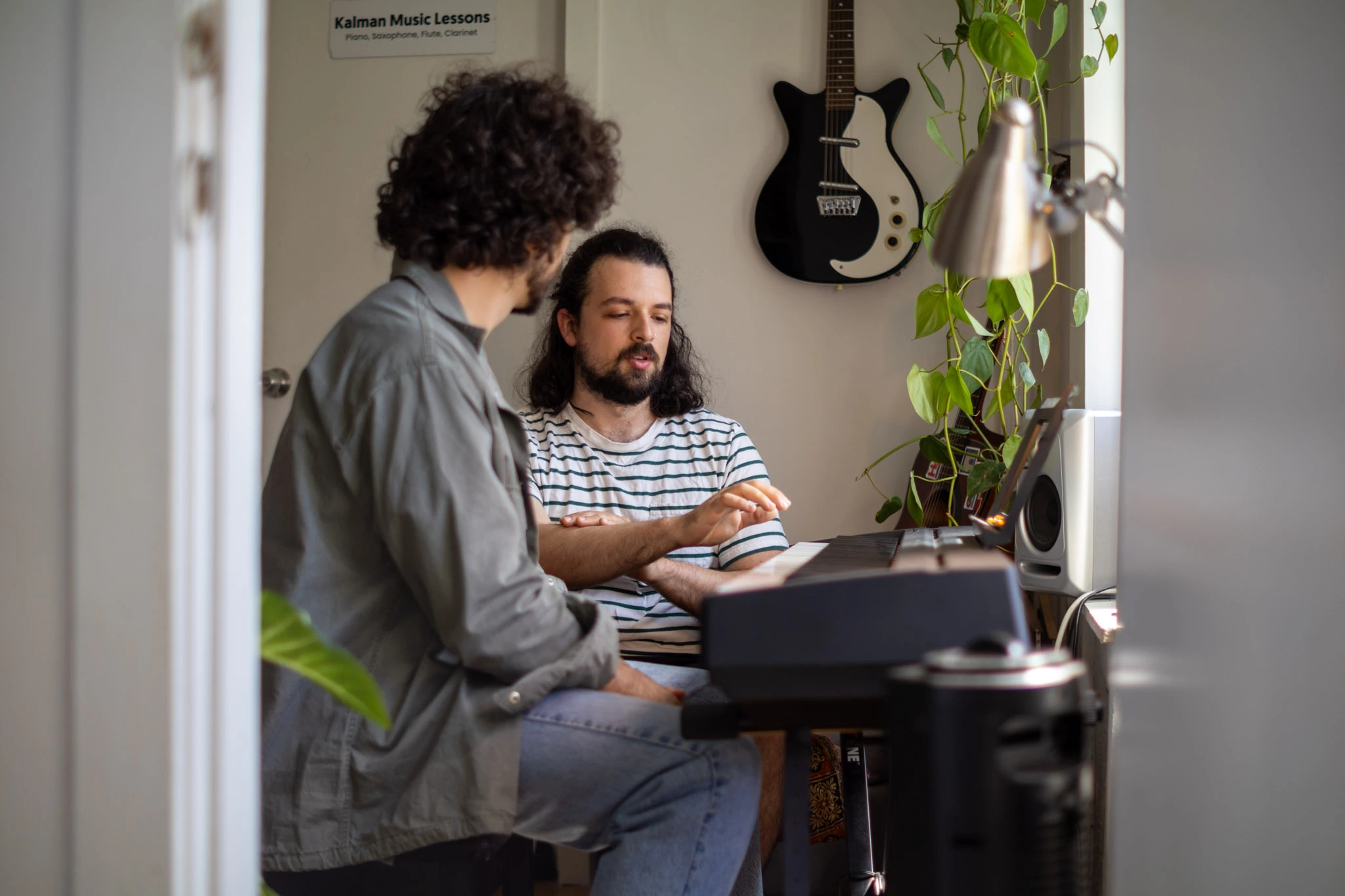
Music education should work for every brain. At Kalman Music, we provide neurodivergent-friendly lessons in Manhattan and Brooklyn for students with ADHD, autism, dyslexia, sensory processing differences, and other learning differences. Our teachers understand that traditional music education often doesn’t accommodate diverse learning styles—so we’ve created a flexible, individualized approach that celebrates how your brain works, not fights against it.
Why Neurodivergent Students Thrive with Music
Music Leverages Neurodivergent Strengths
Many neurodivergent individuals have exceptional abilities that align perfectly with music:
- Pattern recognition (common in autism) helps with understanding musical structure
- Hyperfocus (ADHD trait) enables deep musical practice sessions
- Emotional sensitivity (many neurodivergent traits) creates profound musical expression
- Creative thinking leads to unique musical interpretations
- Auditory processing strengths (common in dyslexia) support ear training
We help students leverage these strengths rather than focusing on perceived deficits.
Music Provides Structure Without Rigidity
Music offers clear patterns, rules, and structures—which many neurodivergent learners find comforting—while still allowing creative freedom and personal expression. It’s predictable yet flexible, structured yet expressive.
Non-Verbal Communication & Emotional Regulation
For students who struggle with verbal communication or emotional regulation, music provides:
- Alternative ways to express feelings
- Calming sensory input (especially piano, guitar, singing)
- Stimulating sensory input (especially drums, brass instruments)
- Predictable patterns that reduce anxiety
- Creative outlets for processing emotions
How Kalman Makes Music Lessons Work for Neurodivergent Learners
1. Personalized to Your Specific Needs
Every neurodivergent person is different. We don’t use a one-size-fits-all “neurodivergent curriculum.” Instead, your teacher learns:
- What sensory inputs you find calming vs. overwhelming
- How you learn best (visual, auditory, kinesthetic, by doing)
- What motivates you and what frustrates you
- Your executive function strengths and challenges
- Your specific interests and hyperfixations
Then we design lessons around YOUR brain, not some theoretical average student.
2. In-Home Environment Reduces Anxiety
For many neurodivergent individuals, unfamiliar environments create anxiety. Lessons in your own home mean:
- Familiar, comfortable surroundings you already know
- No sensory overload from commuting on crowded subways
- Control over lighting, temperature, seating to suit your needs
- Immediate access to calming tools, sensory items, or breaks
- No unexpected changes in environment week to week
Learning happens best when you feel safe. Your home provides that safety.
3. Flexible Structure & Breaks
We understand executive function challenges. Our approach includes:
- Clear lesson structure (you know what’s coming next)
- Built-in breaks when needed—no pressure to sit still for 60 minutes straight
- Movement integration (pacing while thinking, fidgets during theory, etc.)
- Task chunking (breaking big goals into tiny, achievable steps)
- Visual schedules for lessons if helpful
- Transition warnings before switching activities
4. Multi-Sensory Teaching Methods
Different brains process information differently. We use:
- Visual aids: Color-coding, charts, diagrams, video demonstrations
- Auditory learning: Listening, singing, playing by ear
- Kinesthetic learning: Movement, touch, physical demonstration
- Written materials: Sheet music, written notes, practice logs
- Technology: Apps, recordings, play-along tracks
Your teacher uses whatever combination works for YOUR brain.
5. Interest-Led Curriculum
Hyperfixations and special interests are powerful learning motivators. We incorporate:
- Songs you love (video game music, movie themes, specific artists)
- Genres you’re passionate about (jazz, metal, classical, K-pop, whatever!)
- Music theory through your interests (analyzing your favorite songs)
- Composition (if you want to create your own music)
When music education aligns with your interests, learning feels effortless.
6. Patient, Understanding Teachers
Our instructors are:
- Experienced with neurodivergent students (many teach in our inclusive program)
- Patient and non-judgmental about processing speed, “weird” behaviors, or meltdowns
- Flexible and adaptable when lesson plans need to change
- Clear communicators who explain exactly what they mean
- Comfortable with stimming, echolalia, or other neurodivergent traits
- Trained to recognize sensory overload, anxiety, or shutdown signs
You’re not expected to mask or act neurotypical. You can be yourself.
7. Accommodations for Specific Challenges
For ADHD:
- Shorter, varied activities (not 60 minutes of scales!)
- Movement breaks built into lessons
- Explicit external structure and accountability
- Engaging, stimulating repertoire
- Practice strategies for time blindness and procrastination
For Autism:
- Clear, literal communication (no vague instructions)
- Predictable lesson structure
- Advance notice of changes
- Respect for sensory needs (volume, textures, etc.)
- Acceptance of stimming and self-regulation behaviors
For Dyslexia:
- Multi-sensory music reading approaches
- Color-coded notation if helpful
- More ear training, less note-reading pressure
- Technology aids (apps that highlight notes as they’re played)
- Celebrate auditory strengths
For Sensory Processing Differences:
- Control over volume (especially crucial for sensitive hearing)
- Instrument choices that match sensory preferences
- Fidgets and sensory tools welcome during lessons
- Awareness of when input is too much or too little
- Flexible seating and positioning
Best Instruments for Neurodivergent Learners
Piano
- Pros: Visual layout, predictable patterns, volume control, calming repetitive practice
- Good for: Students who like patterns, visual learners, those seeking calming activities
- Sensory: Moderate tactile input, controllable volume
Guitar
- Pros: Portable, popular music accessible, tactile strings, visual fretboard
- Good for: Teens/adults with specific music interests, those who like tactile input
- Sensory: Strong tactile input, volume controllable (acoustic vs. electric)
Drums
- Pros: Full-body movement, excellent for energy release, rhythm-focused
- Good for: High-energy students, those needing proprioceptive input, rhythm-focused learners
- Sensory: Very high proprioceptive and auditory input (can be loud!)
Ukulele
- Pros: Small, easy to start, quick success, gentle on fingers
- Good for: Younger kids, those overwhelmed by guitar, anyone wanting fast progress
- Sensory: Moderate tactile input, quieter than guitar
Voice
- Pros: No equipment needed, deeply personal, breath work aids regulation
- Good for: Expressive students, those struggling with fine motor skills, emotional regulation needs
- Sensory: Internal vibrational input, self-generated sound
Saxophone/Woodwinds
- Pros: Breath control (calming), expressive, jazz opportunities
- Good for: Students interested in jazz/band, those who benefit from breath work
- Sensory: Moderate breath resistance, controllable volume
We’ll help you choose an instrument that matches your sensory preferences, motor skills, and interests.
Success Stories
“My son has autism and severe sensory sensitivities. Previous music teachers couldn’t handle his needs. His Kalman teacher gets it—she lets him pace during theory, plays at volumes he can tolerate, and celebrates his perfect pitch instead of treating it like a quirk. He’s thriving.” - Parent, Park Slope
“I have ADHD and always thought I was ‘too scattered’ for music lessons. My teacher structures lessons with movement breaks, uses music I actually like, and doesn’t judge when I forget to practice. For the first time, I’m learning music without feeling like a failure.” - Adult student, Williamsburg
“My daughter’s autism means she struggles with transitions and new environments. In-home lessons eliminate that stress. Her teacher respects her need for sameness and has been incredibly patient. She’s been playing violin for a year and loves it.” - Parent, Upper West Side
Manhattan & Brooklyn Locations We Serve
Manhattan Neighborhoods: Upper West Side, Upper East Side, Midtown, Chelsea, Greenwich Village, East Village, Lower East Side, Tribeca, Financial District, and more.
Brooklyn Neighborhoods: Williamsburg, Greenpoint, Park Slope, Prospect Heights, Carroll Gardens, Cobble Hill, Brooklyn Heights, Fort Greene, Clinton Hill, Bed-Stuy, Bushwick, and more.
Schedule & Pricing
Flexible Scheduling:
- Consistent weekly time (helpful for routine)
- Or flexible scheduling if routine causes anxiety
- Mornings, afternoons, evenings, weekends available
- Lessons can be shorter if 60 minutes is too long
Transparent Pricing:
- In-Home Lessons: $60 for 30 minutes, $90 for 60 minutes (includes $10 travel fee)
- Studio Lessons: $50 for 30 minutes, $80 for 60 minutes
Lesson Length Flexibility:
- 30 minutes for younger kids or those who fatigue quickly
- 45 minutes (custom arrangement)
- 60 minutes for older students/adults who can sustain focus
Frequently Asked Questions
Will my child need to sit still for the whole lesson?
No! Movement breaks are built in. Many of our neurodivergent students learn better while moving—pacing, bouncing on an exercise ball, or using fidgets. Your teacher will work with your child’s need for movement, not against it.
What if my child has a meltdown during a lesson?
Our teachers are trained to recognize signs of dysregulation and respond with patience and understanding. We’ll pause, provide space, and resume when your child is ready. Meltdowns are not “behavior problems”—they’re communication that something is overwhelming.
Can my child stim during lessons?
Absolutely. Stimming is self-regulation, not misbehavior. Your child can stim freely during lessons. If a particular stim makes instrument playing difficult, we’ll work together to find alternatives—but the goal is never to suppress stimming.
What if traditional music notation is too hard?
Many neurodivergent students struggle with standard notation—and that’s okay. We can use:
- Color-coded notation
- Number systems
- Tablature (for guitar/bass)
- Learning by ear
- Video demonstrations
- Whatever works for your brain
Reading traditional notation is helpful but not required to make beautiful music.
What about executive function challenges with practice?
We get it. We provide:
- Clear, written practice instructions
- Recordings of lessons to review
- Practice apps and accountability tools
- Realistic practice expectations (10-15 minutes for kids is fine!)
- Strategies for time blindness and task initiation
Practice is important, but we work with your executive function reality.
Will the teacher understand my child’s specific diagnosis?
While we can’t claim medical expertise, our teachers have experience working with ADHD, autism, dyslexia, sensory processing disorder, and other neurodivergent conditions. We approach each student as an individual, learning what THEY need rather than relying on diagnosis stereotypes.
What if my child can’t communicate verbally?
We can adapt! We use:
- Visual schedules and choice boards
- AAC devices or communication apps
- Pointing/gesturing
- Trial and error to learn preferences
- Parent input on communication strategies
Music is a form of communication—verbal speech isn’t required.
Can adults with ADHD/autism take lessons?
Yes! Many of our neurodivergent adult students find music lessons incredibly fulfilling. We adapt teaching methods for adult learners while respecting your neurodivergent needs.
Ready to Start?
Music education should celebrate how your brain works, not try to force you into a neurotypical mold. At Kalman Music, we provide patient, individualized instruction that accommodates sensory needs, executive function challenges, and diverse learning styles.
Book your trial lesson today. Meet your teacher, discuss specific accommodations, and see if our approach works for you or your child. No pressure, no judgment—just genuine, inclusive music education.
Neurodivergent-friendly music lessons in Manhattan & Brooklyn. ADHD, autism, dyslexia, and sensory processing accommodations. Patient teachers, in-home comfort, flexible personalized approach. All instruments, all ages.