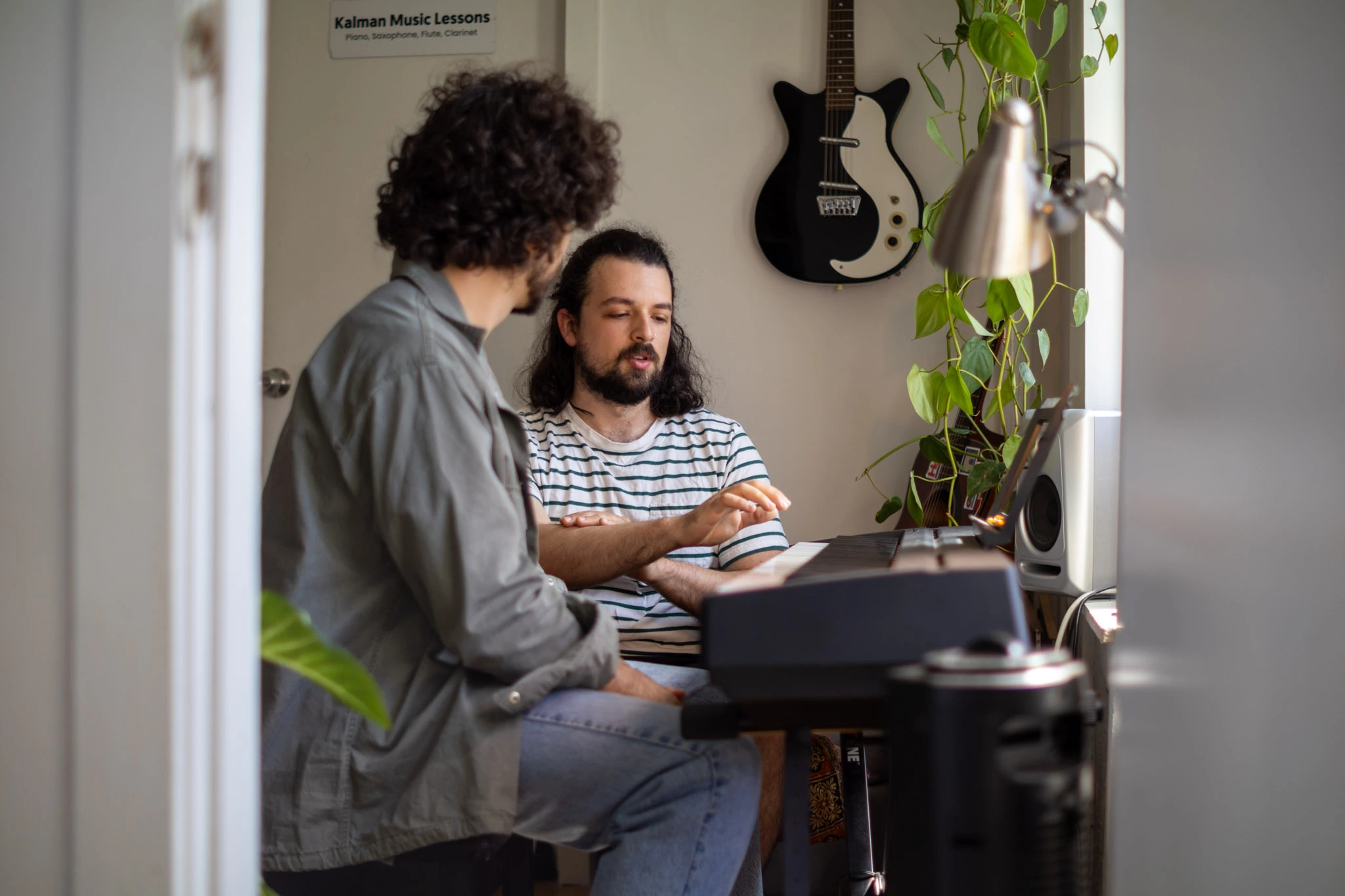
Kalman Music offers exceptional Clarinet Lessons in Manhattan designed for musicians of all levels, from beginners to advanced players. Whether you are seeking private Clarinet Lessons in Manhattan or local Clarinet Lessons in Manhattan, our instruction combines technique, musicality, and personal attention. Each lesson is structured to develop tone, precision, and musical expression, guided by professional Clarinet Lessons in Manhattan instructors who ensure students reach their goals efficiently. With a focus on creativity and skill development, experienced Clarinet Lessons in Manhattan at Kalman Music cultivate both confidence and mastery, making each session inspiring and productive for every student.
Unique Features of Kalman Music Clarinet Lessons
Kalman Music’s Clarinet Lessons in Manhattan stand out due to a combination of personalized instruction, structured methodology, and emphasis on both technical and musical growth. Our approach ensures every student receives attention tailored to their individual needs. Whether through private Clarinet Lessons in Manhattan or local Clarinet Lessons in Manhattan, lessons are designed to cultivate proficiency, creativity, and confidence.
Personalized Lesson Structure
Every student receives a learning plan that focuses on their current skill level and musical objectives. Features include:
- Custom exercises targeting tone, articulation, and finger agility.
- Flexible pacing that accommodates each student’s learning style.
- Integration of musical repertoire to strengthen performance skills.
- Opportunities to explore diverse musical genres for broader skill development.
Expert Instruction
Our instructors provide professional Clarinet Lessons in Manhattan with meticulous attention to technique and artistry. Key aspects include:
- Guidance on proper embouchure, breath control, and finger positioning.
- Emphasis on expressive phrasing and musical interpretation.
- Continuous feedback on performance, allowing immediate correction and growth.
- Encouragement of creative expression while maintaining technical precision.
Comprehensive Learning Approach
Lessons integrate technical mastery with musical understanding. Experienced Clarinet Lessons in Manhattan focus on:
- Building strong foundational skills in scales, arpeggios, and exercises.
- Expanding repertoire from classical to contemporary music.
- Developing sight-reading and improvisational skills to enhance versatility.
- Structured sessions that combine theory, technique, and practical application.
Flexible Lesson Options
Kalman Music accommodates various schedules and learning preferences:
- One-on-one private Clarinet Lessons in Manhattan for personalized focus.
- Local Clarinet Lessons in Manhattan in small group settings to encourage collaboration.
- Options for in-person or remote lessons, ensuring accessibility for all students.
- Adaptable lesson lengths and frequency to match individual goals.
Engagement and Motivation
Lessons are designed to maintain enthusiasm and progress through:
- Achievable milestone goals to track improvement.
- Varied exercises and repertoire to maintain engagement.
- Performance opportunities to apply skills in real-world settings.
- Encouragement of self-expression and creativity to foster a lifelong passion for music.
Advantages of Learning the Clarinet
Learning the clarinet offers a wealth of benefits for students at all skill levels. Kalman Music’s Clarinet Lessons in Manhattan emphasize not only technical skill but also the broader advantages of playing this versatile instrument. Our professional Clarinet Lessons in Manhattan provide a structured approach that helps students achieve musical proficiency while fostering personal growth. Whether through private Clarinet Lessons in Manhattan or local Clarinet Lessons in Manhattan, students experience multiple advantages that extend beyond music.
Enhanced Musical Skills
Studying the clarinet develops essential musical abilities:
- Tone Control: Focused instruction on breath, embouchure, and finger positioning ensures a rich, resonant sound.
- Rhythmic Precision: Lessons improve timing and rhythmic understanding, essential for ensemble and solo performance.
- Sight-Reading Mastery: Reading sheet music fluently strengthens overall musical literacy.
- Dynamic Range: Exploration of dynamics and articulation cultivates expressive versatility.
Cognitive Benefits
Engaging in experienced Clarinet Lessons in Manhattan enhances cognitive abilities:
- Memory Development: Learning music improves both short-term and long-term memory.
- Problem-Solving Skills: Practicing complex passages encourages critical thinking and strategic approaches.
- Focus and Discipline: Regular practice fosters concentration and perseverance.
- Creativity: Expressive musical interpretation stimulates imaginative thinking.
Emotional and Social Advantages
Playing the clarinet contributes to emotional well-being and social interaction:
- Stress Relief: Music provides a creative outlet for emotional expression.
- Confidence Building: Mastery of challenging pieces reinforces self-assurance.
- Collaboration: Ensemble opportunities teach teamwork and listening skills.
- Cultural Appreciation: Exposure to diverse genres enhances cultural understanding.
Versatility and Adaptability
Clarinet study prepares students for various musical opportunities:
- Solo Performance: Gain skills to perform confidently in recitals or personal projects.
- Ensemble Play: Ability to participate in orchestras, bands, or chamber groups.
- Composition and Improvisation: Lessons encourage creative exploration in composing and improvising.
- Cross-Instrument Proficiency: Skills learned on the clarinet can translate to other woodwind instruments.
Long-Term Skill Development
Consistent study in local Clarinet Lessons in Brooklyn or Manhattan builds long-lasting abilities:
- Technical Mastery: Finger dexterity, breath control, and tone precision are continually refined.
- Musical Memory: Students retain repertoire and improve improvisational capability.
- Adaptability: Learners develop flexibility in style, genre, and performance settings.
- Lifelong Engagement: Skills gained encourage continued musical exploration and enjoyment.
Personal Growth Through Music
Kalman Music’s Clarinet Lessons in Manhattan nurture both musicianship and personal development:
- Encourages perseverance through challenging pieces.
- Fosters patience and dedication through structured practice routines.
- Cultivates self-expression, allowing students to communicate emotions through music.
- Builds a sense of accomplishment and pride in musical achievements.
Ideal Students for Our Clarinet Lessons
Kalman Music’s Clarinet Lessons in Manhattan are designed to accommodate a wide range of students, from beginners to advanced musicians. Our professional Clarinet Lessons in Manhattan provide tailored instruction to suit varying skill levels, learning styles, and musical goals. Whether engaging in private Clarinet Lessons in Manhattan or local Clarinet Lessons in Manhattan, each student receives focused guidance to develop technical ability, musical expression, and confidence.
Beginners
For those just starting their musical journey, our experienced Clarinet Lessons in Manhattan provide:
- Foundational Skills: Instruction on posture, embouchure, and basic finger positioning.
- Introductory Music Theory: Understanding notes, rhythms, and scales.
- Simple Repertoire: Gradual progression through beginner-friendly pieces to build confidence.
- Supportive Environment: Encouragement and structured lessons to foster steady progress.
Intermediate Students
Musicians with some experience benefit from lessons emphasising skill refinement:
- Technical Development: Focus on articulation, tone, and complex fingerings.
- Expanded Repertoire: Exposure to diverse genres and challenging compositions.
- Sight-Reading Improvement: Enhanced ability to read and perform new music efficiently.
- Performance Preparation: Training for recitals, ensembles, and auditions.
Advanced Students
For those pursuing high-level mastery, our private Clarinet Lessons in Manhattan provide:
- Advanced Techniques: Mastery of extended ranges, dynamics, and stylistic nuances.
- Interpretive Skills: Emphasis on expressive performance and musical storytelling.
- Professional Readiness: Preparation for auditions, competitions, or professional engagements.
- Customization: Lessons tailored to the student’s specific goals and musical interests.
Students of All Ages
Kalman Music welcomes learners across all age groups:
- Children: Lessons focus on fun, engagement, and gradual skill-building.
- Teenagers: Instruction balances technical growth with creative expression.
- Adults: Flexible programs support personal enrichment, hobbyist goals, or performance ambitions.
- Seniors: Emphasis on enjoyment, cognitive benefits, and continued musical engagement.
Ensemble and Solo Players
Our lessons support both collaborative and individual pursuits:
- Orchestral or Band Members: Focus on blending, intonation, and ensemble performance skills.
- Solo Performers: Emphasis on stage presence, phrasing, and expressive playing.
- Chamber Musicians: Guidance on communication, balance, and ensemble cohesion.
- Improvisers: Encouragement of creative exploration and jazz or contemporary styles.
Students Seeking Music Theory and Sight-Reading Skills
Our Clarinet Lessons in Manhattan integrate foundational knowledge for comprehensive musicianship:
- Music Literacy: Understanding notation, rhythm, and harmonic concepts.
- Aural Skills: Development of pitch recognition and ear training.
- Sight-Reading Confidence: Ability to approach new pieces with ease and accuracy.
- Analytical Understanding: Insight into structure and musical phrasing.
Students with Varied Goals
Whether the aim is recreational, educational, or professional, our lessons are adaptable:
- Hobbyists: Enjoy music as a personal passion.
- Academic Musicians: Prepare for school or conservatory programs.
- Career-Oriented Players: Focused preparation for auditions and professional performance.
- Creative Explorers: Develop improvisation, composition, and personal style.
Step-by-Step Clarinet Lesson Method
At Kalman Music, our Clarinet Lessons in Manhattan follow a structured, methodical approach designed to nurture skill development, musicality, and confidence. Each step is carefully crafted to ensure students progress efficiently, whether they are participating in local clarinet lessons in Manhattan, private clarinet lessons in Manhattan, or working with a professional clarinet teacher in Manhattan.
Lesson Planning and Goal Setting
Every student begins with a clear plan:
- Assessment: Initial evaluation of skill level, technique, and musical understanding.
- Goal Setting: Establishing short-term and long-term objectives tailored to the student’s ambitioCustomisationstomization: Designing exercises and repertoire that match the student’s abilities.
- Regular Progress Reviews: Monitoring growth and adjusting lesson content as needed.
Foundational Skill Development
Our step-by-semphasises emphasizes strong fundamentals:
- Posture and Hand Positioning: Ensuring proper alignment for comfort and efficiency.
- Breath Control: Techniques to maintain a steady, rich tone.
- Finger Coordination: Exercises to strengthen accuracy and agility.
- Tone Production: Focused practice to develop a consistent, resonant sound.
Incremental Technique Building
Students gradually tackle more advanced skills through:
- Scale and Arpeggio Practice: Building fluency and muscle memory.
- Articulation Exercises: Developing clarity in staccato, legato, and tonguing techniques.
- Rhythmic Precision: Mastery of complex rhythms and time signatures.
- Dynamic Control: Learning to vary volume and expression effectively.
Repertoire-Based Learning
Our lessons incorporate engaging music to reinforce technical skills:
- Genre Variety: Classical, jazz, contemporary, and pop arrangements.
- Piece Analysis: Understanding structure, phrasing, and style.
- Incremental Difficulty: Progressing from simple to challenging compositions.
- Performance Preparation: Lessons geared toward recitals, school performances, or auditions.
Integration of Music Theory and Sight-Reading
Theory is seamlessly woven into the practical learning process:
- Notation FaRecognisingRecognizing key signatures, accidentals, and rhythms.
- Sight-Reading Practice: Developing confidence in playing new music accurately.
- Ear Training: Identifying intervals, harmonies, and melodic patterns.
- Analytical Skills: Understanding musical phrases and expressionPersonalisedersonalized Practice Guidance Independent practice is a key component of progress:
- Structured Practice Routines: Clear daily and weekly goals to reinforce skills.
- Targeted Customised Customized drills to address weak areas.
- Feedback Loops: Teachers provide constructive feedback to maximize efficiency.
- Motivation Techniques: Strategies to keep practice engaging and rewarding.
Performance and Mastery Focus
As students advance, lessons emphasize application and expression:
- Solo Performance Techniques: Stage presence, phrasing, and expressive playing.
- Ensemble Skills: Blend, balance, and communication within groups.
- Improvisation Opportunities: Encouraging creative expression and stylistic versatility.
- Evaluation: Periodic review of progress and readiness for higher-level challenges.
Flexible Lesson Formats
Kalman Music offers multiple formats to suit student needs:
- Private Lessons: One-on-one attention with a dedicated instructor.
- Local Group Sessions: Collaborative learning opportunities for ensemble experience.
- Hybrid Learning Options: Combining in-person instruction with digital resources.
- Adjustable Scheduling: Lessons tailored to the student’s availability and pace.
Core Clarinet Techniques and Skills
Mastering the clarinet requires a strong foundation in both fundamental and advanced techniques. At Kalman Music, our Clarinet Lessons in Manhattan focus on developing these essential skills systematically. Whether attending local Clarinet Lessons in Manhattan, working with a private Clarinet Teacher in Manhattan, or enrolling in professional Clarinet Lessons in Manhattan, students gain the tools to perform confidently and expressively.
Tone Production and Control
A clear, resonant tone is the hallmark of a skilled clarinetist. Lessons emphasize:
- Embouchure Development: Proper lip positioning for consistent sound quality.
- Breath Support: Techniques to maintain airflow and sustain long phrases.
- Dynamic Variation: Ability to play soft and loud passages with control.
- Tonal Consistency: Achieving uniform sound across all registers of the instrument.
Finger Technique and Agility
Smooth, precise finger movement is crucial for technical accuracy:
- Scale Mastery: Major, minor, chromatic, and modal scales for dexterity.
- Finger Coordination Exercises: Synchronization of both hands for complex passages.
- Trills and Ornamentation: Mastering stylistic flourishes and embellishments.
- Speed and Accuracy: Gradual increase in tempo without sacrificing precision.
Articulation and Expression
Expressive playing requires nuanced control of note attacks and phrasing:
- Tonguing Techniques: Single, double, and staccato tonguing for clarity.
- Legato Phrasing: Smooth connection between notes for lyrical passages.
- Accent and Emphasis: Highlighting important notes for musical interpretation.
- Phrasing Awareness: Understanding musical sentences and expressive shaping.
Rhythm and Timing
Accurate rhythm is essential in both solo and ensemble performance:
- Sight-Reading Rhythms: Immediate recognition and execution of written rhythms.
- Complex Time Signatures: Navigating odd meters and syncopation.
- Subdivision Techniques: Breaking beats into smaller units for precision.
- Tempo Control: Maintaining steady timing in varying musical contexts.
Extended Techniques
Advanced clarinetists explore additional skills to expand versatility:
- Overtones and Altissimo Notes: Expanding the range of the instrument.
- Multiphonics and Special Effects: Creative techniques for contemporary repertoire.
- Circular Breathing Fundamentals: For sustained phrases in advanced playing.
- Artistic Interpretation: Using techniques to enhance musical storytelling.
Repertoire and Stylistic Techniques
Learning a variety of styles improves adaptability:
- Classical Repertoire: Developing phrasing, expression, and historical accuracy.
- Jazz and Contemporary Styles: Incorporating improvisation, swing, and modern techniques.
- Ensemble Skills: Blending, balance, and communication in orchestras and bands.
- Transcription Exercises: Learning by listening and mimicking professional recordings.
Practice Strategies for Skill Mastery
Structured practice enhances technique and retention:
- Segmented Practice: Breaking challenging passages into manageable sections.
- Slow Practice: Building accuracy and precision before increasing speed.
- Repetition with Focus: Emphasizing weak areas for continuous improvement.
- Tracking Progress: Recording and reviewing to monitor development.
Holistic Skill Integration
All these techniques work together to create well-rounded musicians:
- Technical Fluency: Seamless coordination of tone, fingers, and rhythm.
- Musical Expression: Conveying emotion and nuance in performance.
- Versatility: Ability to perform solo, ensemble, and contemporary pieces confidently.
- Confidence: Building readiness for auditions, performances, or personal goals.
Support With Music Theory and Sight-Reading
A strong foundation in music theory and sight-reading amplifies a student’s ability to perform confidently and interpret music with clarity. Kalman Music offers structured support within our Clarinet Lessons in Manhattan, ensuring each learner gains the theoretical knowledge and visual-reading accuracy required for high-level musicianship. Whether you are enrolled in local Clarinet Lessons in Manhattan, exploring private Clarinet Lessons in Manhattan, or pursuing professional Clarinet Lessons in Manhattan, this part of your training strengthens your overall musical fluency.
Foundational Music Theory for Clarinet Players
Music theory equips clarinetists with essential concepts that shape how they interpret and perform written music. Training includes:
- Pitch Awareness: Relating note names, staff positions, and fingerings.
- Intervals: Recognizing step patterns and distances for melodic accuracy.
- Rhythmic Values: Grasping note lengths, rests, and timing structures.
- Key Signatures: Identifying sharps, flats, and corresponding scale patterns.
Harmonic Awareness for Performance
Lessons also explore the harmonic elements that influence expressive choices and phrasing:
- Chord Recognition: Understanding the harmonic backdrop behind clarinet parts.
- Harmonic Progressions: How chords move and support melodic lines.
- Tonal Centers: Recognizing where phrases resolve or build tension.
- Modulation Concepts: Identifying key changes common in clarinet repertoire.
Sight-Reading Skill Development
Sight-reading is central to confident performance, ensemble participation, and audition preparation. Students develop this skill through structured exercises:
- Rhythm-First Reading: Interpreting rhythmic patterns before adding pitch.
- Pitch Mapping: Quickly locating notes across the clarinet’s registers.
- Eye-Lead Training: Reading slightly ahead of the current measure for smoother flow.
- Tempo Consistency: Keeping steady despite unfamiliar patterns or passages.
Sight-Reading Techniques for Accuracy and Flow
To make sight-reading smooth and musical, lessons include strategies such as:
- Scanning the Page: Quickly assessing key, time signature, and dynamics.
- Pattern Recognition: Spotting repeated figures or melodic motifs.
- Interval-Based Reading: Moving through the music by recognizing interval shapes.
- Measure Chaining: Linking groups of measures for momentum and stability.
Music Theory Application to Clarinet Playing
Theory becomes meaningful when applied directly to clarinet performance. Students work on:
- Articulating Based on Phrasing: Using theory to shape musical sentences.
- Breath Planning: Mapping breaths according to harmonic movement.
- Dynamic Decisions: Interpreting markings based on structural significance.
- Expressive Playing: Connecting theory concepts with emotional nuance.
Key Theory Concepts Reinforced in Lessons
- Major and minor scales
- Modal patterns
- Meter classifications
- Chords and extensions
- Melody shaping
- Rhythmic subdivisions
- Transposing skills
- Dynamics and expressive symbols
How Sight-Reading Improves Overall Clarinet Skills?
Students enrolled in experienced Clarinet Lessons in Manhattan benefit from consistent sight-reading integration throughout their lesson plan. These improvements become clear as they begin to:
- Play With Confidence: Even unfamiliar music becomes manageable.
- Learn New Pieces Quickly: Reduced time spent decoding notation.
- Adapt to Ensemble Environments: Follow conductors and adjust to group timing instantly.
- Communicate Musically: Sight-reading fluency enhances spontaneous collaboration.
Combined Power of Theory and Sight-Reading
When theory knowledge merges with sight-reading strength, clarinetists develop:
- Sharper Musical Intelligence: Ability to interpret what they see with clarity and purpose.
- Stronger Technical Precision: Fewer errors, better phrasing, and improved intonation.
- Enhanced Creativity: Freedom to explore musical ideas with confidence.
- Greater Versatility: Effective performance in classical, modern, and jazz settings.
Why Choose Kalman Music?
Selecting a place for Clarinet Lessons in Manhattan requires assurance that every session supports real progress, technical refinement, and artistic growth. Kalman Music offers an approach centered on clarity, structure, and professional-level dedication. Students develop measurable improvement through lessons shaped around precision, tone development, and confident musical expression. The focus remains entirely on the student’s advancement, giving each learner the tools to elevate performance and build a stronger connection with their instrument.
A Focused Learning Environment
The setting of Kalman Music encourages discipline without pressure. Students practice in an atmosphere designed for clarity and concentration, helping them stay committed to their goals. The structure of each lesson remains tailored, thoughtful, and built with the intention of strengthening the essential aspects of clarinet performance, from breath support to articulation control. This environment supports steady growth for learners at any stage.
Consistent Support for Musical Growth
Each learner receives steady guidance shaped around their personal goals. Whether someone seeks Local Clarinet Lessons in Manhattan or Private Clarinet Lessons in Manhattan, the support structure stays consistent and reliable. Instruction aims to refine technique while advancing musical identity. This steady approach ensures that progress never feels scattered. Students stay aligned with a clear developmental direction built for long-term artistry.
Core Strengths of Kalman Music
A strong instructional foundation makes training more purposeful. Several strengths define the approach:
- Structured sessions that never drift from the lesson goal
- Clear pathways for technical advancement
- Learning plans that adapt without disrupting continuity
- Focus on sound development and fluid finger coordination
- Musical shaping introduced through controlled phrasing and tone colors
- Support that promotes self-discipline and consistent refinement These strengths help students elevate their artistic abilities through a predictable, organized, and focused training plan.
Technique-Centered Instruction
Clarinet progress thrives when rooted in targeted technique development. Kalman Music provides Professional Clarinet Lessons in Manhattan designed to strengthen:
- Breath management and airflow precision
- Embouchure stability
- Finger coordination that remains even and balanced
- Tone shaping across registers
- Controlled articulation at various speeds
- Smooth transition between dynamics Students move from foundational skills to advanced artistic interpretation without losing clarity or accuracy.
Personal Artistic Development
Every clarinetist carries a unique artistic direction. Instruction at Kalman Music supports that individuality by helping students refine expression, shape musical lines, and deliver confident performances. Lessons incorporate carefully selected repertoire that matches each student’s skill level and artistic goals. This helps musicians build the ability to communicate emotion and intention through their instrument.
Artistic Development Elements
- Introduction to expressive phrasing
- Focus on musical breathing patterns
- Nuanced shaping of sustained notes
- Support for personal style within appropriate technique
- Expansion of interpretive confidence These elements help create well-rounded performers capable of delivering refined clarinet playing in multiple settings.
A Clear Path for Every Student
Whether someone prefers Experienced Clarinet Lessons in Manhattan or a flexible private session format, Kalman Music provides a defined structure that promotes advancement over time. Progress is broken into steps that feel achievable, useful, and aligned with professional expectations. Students receive guidance that strengthens the areas that matter most: tone, control, stability, and musical interpretation.
Reliability and Consistency
Kalman Music emphasizes consistent quality in every lesson. Students know what to expect: structured instruction, clarity of direction, and an environment built to support strong technique. This reliability encourages confidence and motivates learners to pursue higher levels of artistry. Training becomes not only productive but also meaningful.
Benefits of Choosing Kalman Music
Students who choose Kalman Music gain access to a supportive, structured, and disciplined clarinet program designed for continued growth. Key benefits include:
- Lessons tailored to individual goals
- A strong focus on technical control
- Support for developing a polished tone
- Steady reinforcement of essential skills
- A structured plan that avoids confusion
- A learning environment that encourages precision and artistry
- Consistent improvement through deliberate practice strategies These benefits create a pathway that strengthens both technical and expressive performance, ensuring that learners grow continuously.
FAQs
How long does it take to see progress in clarinet skills? Progress depends on practice consistency, lesson frequency, and a student’s learning pace. Many learners begin noticing improvements in tone stability, breath control, and finger coordination within a few weeks. Regular sessions with Clarinet Lessons in Manhattan help refine technique and maintain steady growth toward stronger musicianship. Are clarinet lessons suitable for total beginners? Yes, beginners can start without any prior musical experience. Local Clarinet Lessons in Manhattan introduce essential basics such as posture, instrument setup, embouchure formation, and breath support. Lessons gradually advance toward tone development and early melodies, allowing students to build confidence throughout each stage of their learning process. Do students need their own clarinet before starting lessons? Owning a clarinet is helpful, but some students begin with rental arrangements if purchasing immediately is not preferred. Private Clarinet Lessons in Manhattan recommend having a reliable instrument to practice at home since consistent daily practice supports faster skill development and stronger comfort with the instrument’s mechanics. How often should clarinet students schedule lessons? Most students choose weekly sessions, which provide steady progress without overwhelming their schedule. Professional Clarinet Lessons in Manhattan can also accommodate more frequent lessons for dedicated learners. Regular coaching helps reinforce fundamentals, correct habits early, and maintain structured improvement aligned with long-term musical goals. Can adults enroll in clarinet lessons? Yes, adults are welcome. Clarinet Lessons in Manhattan offer adaptable pacing, clear instruction, and flexible skill-building routines for adult learners. Many adults appreciate the structured method, musical creativity, and targeted exercises designed to improve tone, breath control, and fluency at any stage of their musical development. What styles of music can be learned during lessons? Students may explore a wide range of genres. Experienced Clarinet Lessons in Manhattan cover classical music, ensemble repertoire, jazz phrasing, improvisation methods, solo performance skills, and modern compositions. Lessons focus on versatility and help students strengthen musical expression while refining essential clarinet techniques across varied styles. Are virtual clarinet lessons available for Manhattan students? Yes, many learners choose virtual sessions for convenience. Local Clarinet Lessons in Manhattan provide remote learning options that follow the same structure as in-person lessons. Students work on tone, rhythm, breath support, and technique during online sessions while receiving detailed feedback to maintain consistent progress. What ages are appropriate for starting clarinet lessons? Young learners typically begin around age nine when hand size and breath capacity allow comfortable playing. Private Clarinet Lessons in Manhattan also support teens and adults at any level. Lessons adapt to individual needs to ensure that each student builds strong foundational skills and musical confidence. What materials are required during lessons? Students usually need a functioning clarinet, reeds, cleaning supplies, and method books recommended by instructors. Professional Clarinet Lessons in Manhattan introduce additional learning materials as needed. Reeds, sheet music, and practice tools help maintain smooth lesson progress and encourage consistent technical improvement during home practice. Can clarinet lessons help students prepare for auditions? Yes, audition preparation is available for school ensembles, youth orchestras, and other opportunities. Experienced Clarinet Lessons in Manhattan provide targeted coaching such as tone refinement, articulation clarity, phrasing development, and sight-reading practice. This focused preparation strengthens performance confidence and improves overall readiness for audition requirements.