Piano Learning Apps vs Real Teachers
Digital technology has transformed the way people approach music education. Students now have access to mobile platforms, video tutorials, and interactive practice tools that promise quick musical progress. Many beginners researching music education options also search for structured environments such as piano lessons in New York City, hoping to decide whether personal instruction or digital tools provide better results.
Both approaches offer valuable advantages. Apps provide flexibility and independence, while teachers deliver guidance, correction, and personalized instruction. Each method shapes musical development in different ways.
Choosing the right approach depends on the student’s goals, motivation, learning style, and level of commitment. Some musicians thrive with independent practice, while others benefit from direct mentorship.
A balanced comparison of these two learning paths reveals the strengths and limitations of each.
The Rise of Digital Piano Learning
Technology has expanded access to music education across the globe. Mobile devices now provide interactive piano instruction through visual keyboards, gamified exercises, and step-by-step tutorials.
Many beginners appreciate the convenience of digital learning tools. These platforms allow students to practice at any time without scheduling appointments.
Digital platforms often include:
- Interactive sheet music
- Practice tracking systems
- Real-time note recognition
- Visual keyboard demonstrations
Such features make early piano training feel engaging and accessible.
Students who prefer independent study often enjoy the freedom these tools provide.
Advantages of Piano Learning Apps
Piano apps appeal to many beginners because they simplify the first stages of musical education. Their interactive design encourages experimentation and curiosity.
Several benefits make digital tools attractive for new players.
Flexible Learning Schedule
Apps allow students to practice whenever they choose. There is no fixed lesson time or travel requirement.
This flexibility benefits people with busy schedules. Practice can occur early in the morning, during breaks, or late at night.
The ability to control practice timing encourages consistency.
Self-Paced Progress
Each student develops musical skills at a different speed. Digital tools allow learners to move through lessons at their own pace.
If a concept feels challenging, the student can repeat the exercise multiple times without pressure.
If a lesson feels easy, progress can move forward quickly.
This adaptability suits independent learners.
Interactive Practice Features
Many digital learning platforms include interactive exercises that track accuracy and timing.
Examples of common features include:
- Real-time feedback on played notes
- Scoring systems for practice performance
- Visual indicators showing finger placement
- Built-in metronomes for rhythm training
These tools encourage structured practice even without a teacher present.
Limitations of Learning Through Apps
Despite their convenience, digital learning tools cannot replace every aspect of musical instruction.
Several limitations affect their effectiveness.
Limited Personal Feedback
Apps analyze note accuracy and rhythm but cannot fully evaluate musical expression or physical technique.
Important details such as posture, hand position, and tension may go unnoticed.
Without correction, beginners may develop habits that slow long-term progress.
Lack of Emotional Connection
Music thrives on human interaction. Digital platforms deliver information but cannot provide emotional encouragement.
Students sometimes lose motivation when practicing alone for extended periods.
A supportive mentor often inspires greater dedication.
One-Size-Fits-All Curriculum
Most digital learning systems follow pre-designed lesson paths. These programs cannot easily adapt to the unique strengths or weaknesses of individual students.
A struggling student may need extra explanation, while an advanced learner may need faster progression.
Digital systems often struggle to accommodate these differences.
The Value of Real Piano Teachers
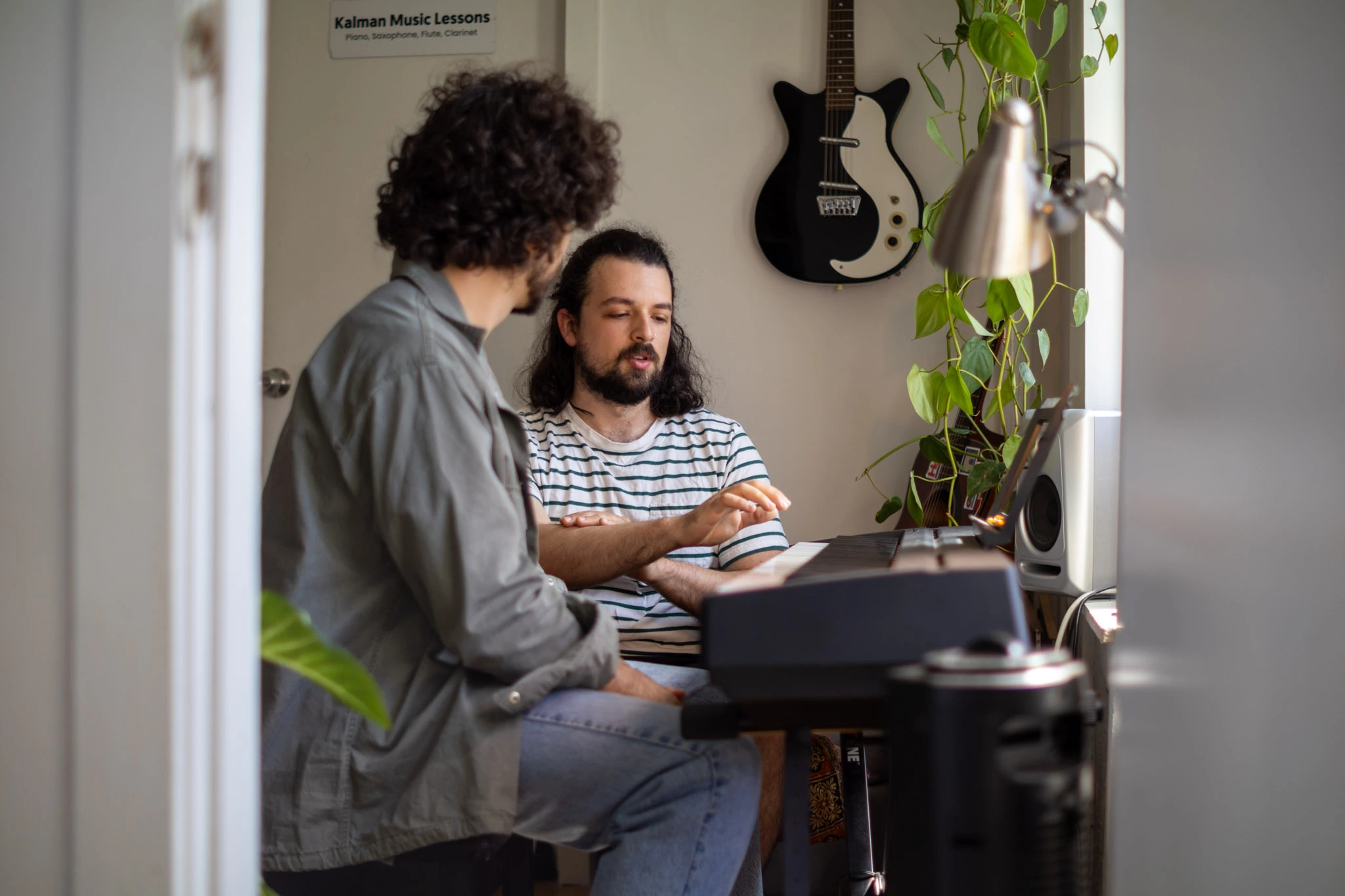
Human instruction remains one of the most powerful forms of musical training. A teacher observes each student’s playing carefully and adjusts instruction accordingly.
Personal guidance shapes both technical development and musical interpretation.
Teachers provide real-time feedback that helps students improve more efficiently.
This interaction often accelerates progress compared with independent study.
Personalized Instruction
Every pianist brings unique abilities and challenges to the instrument. A teacher evaluates these factors and designs lessons tailored to the student’s needs.
Personal instruction may focus on:
- Correcting hand posture
- Improving finger movement
- Strengthening rhythm control
- Developing expressive phrasing
This targeted guidance prevents small mistakes from becoming permanent habits.
Students often progress faster when instruction adapts to their individual development.
Immediate Correction of Mistakes
Mistakes often occur during practice without the student realizing it. A teacher notices these issues immediately.
Real-time correction helps students avoid repeating incorrect patterns.
Common corrections include:
- Adjusting wrist position
- Correcting finger placement
- Fixing uneven rhythm
- Improving dynamic balance
Immediate feedback strengthens technique and musical awareness.
Motivation Through Human Interaction
Many students practice more consistently when they know a teacher will hear their progress.
Personal accountability encourages preparation before each lesson.
Teachers also encourage when students face challenges.
Motivational benefits include:
- Positive reinforcement
- Structured practice expectations
- Celebration of progress
These elements help maintain long-term enthusiasm.
Developing Musical Expression
Music involves more than correct notes. Interpretation, phrasing, and emotional expression give life to a performance.
A teacher helps students shape musical ideas by discussing:
- Tone color
- Dynamic contrast
- Musical storytelling
- Artistic interpretation
Digital tools rarely provide this level of expressive guidance.
Human instruction encourages creativity and personal style.
Structured Learning Progression
Teachers design lesson plans that build musical skills gradually. Each new concept connects with previously developed techniques.
Structured progression may include:
- Technical exercises
- Repertoire selection
- Sight-reading development
- Ear training practice
This systematic approach ensures balanced musical growth.
Students receive clear direction rather than navigating lessons independently.
Challenges of Traditional Piano Lessons
While personal instruction offers many benefits, it also presents certain challenges.
Understanding these factors helps students make informed decisions.
Scheduling Limitations
Traditional lessons require fixed appointment times. Students must adjust their schedules accordingly.
Busy lifestyles may create conflicts with regular lesson times.
Travel to and from the lesson location also requires additional time.
Financial Investment
Private instruction often costs more than digital learning platforms.
While the educational value may justify the expense, some students prefer more affordable alternatives.
Budget considerations sometimes influence learning choices.
Practice Responsibility
Even with a teacher’s guidance, progress depends on consistent practice at home.
Students must remain disciplined between lessons.
Without regular practice, improvement slows regardless of teaching quality.
Combining Apps and Teachers
Many musicians benefit from blending digital tools with traditional instruction. This hybrid approach combines the strengths of both methods.
Apps can support daily practice while teachers provide deeper instruction.
A balanced learning strategy might include:
- Using apps for rhythm drills and note reading
- Practicing the technique exercises assigned by a teacher
- Reviewing lesson material through digital practice tools
Technology becomes a supplement rather than a replacement for human instruction.
This combination often produces excellent results.
Choosing the Right Approach for Your Goals
The best learning method depends on the student’s personal goals and preferences.
Some learners enjoy independent exploration, while others prefer structured mentorship.
Factors to consider include:
- Learning style
- Available practice time
- Budget considerations
- Long-term musical goals
Evaluating these factors helps students select the most effective path.
Both approaches can support meaningful musical development.
The Role of Discipline in Piano Learning
Regardless of the chosen method, progress depends on consistent practice.
Musicians who practice regularly develop stronger finger coordination, rhythm control, and musical memory.
Daily practice habits often include:
- Warm-up exercises
- Technical drills
- Piece practice
- Review of previously learned material
Discipline remains the foundation of musical growth.
Tools and teachers provide direction, but dedication produces results.
Long-Term Musical Development
Musical education continues far beyond the beginner stage. Advanced pianists refine interpretation, explore complex repertoire, and deepen their artistic voice.
Human mentorship often becomes more valuable as musical complexity increases.
However, technology continues to offer useful practice resources.
A balanced relationship between digital tools and personal instruction often supports the strongest long-term development.
Conclusion
Piano learning apps and real teachers each contribute valuable benefits to musical education. Digital platforms provide flexibility, accessibility, and interactive practice tools that support independent study.
Human teachers deliver personalized guidance, technical correction, and artistic mentorship that technology cannot replicate.
The most effective learning path often blends both approaches. Apps can reinforce daily practice, while teachers provide the insight and encouragement that shape confident musical expression.
Regardless of the chosen path, consistent practice, patience, and curiosity remain the true keys to musical progress.